Policy "combination boxing" and multi-industry "accumulation and empowerment" China’s economic recovery is strong.
CCTV News:The China Federation of Logistics and Purchasing and the National Bureau of Statistics released the Purchasing Managers Index of China in May 31. In May, the purchasing managers’ index of manufacturing industry was 49.5%, which was lower than that of last month. However, the production continued to expand and the production and business activities of enterprises maintained a recovery trend. With the gradual promotion of the "combination boxing" of policies such as trade-in and ultra-long-term special national debt, the momentum of China’s economic recovery has been continuously enhanced.
In May, the purchasing managers’ index of China manufacturing industry was 49.5%.

According to the National Bureau of Statistics, in May, the purchasing managers’ index of China’s manufacturing industry was 49.5%, down 0.9 percentage points from the previous month. Influenced by the rapid growth of the manufacturing industry in the early stage, such as a high base and insufficient effective demand, although the prosperity level of the manufacturing industry has declined, the production and operation activities of enterprises have maintained a recovery trend.
Manufacturing production continues to expand and new kinetic energy keeps growing.
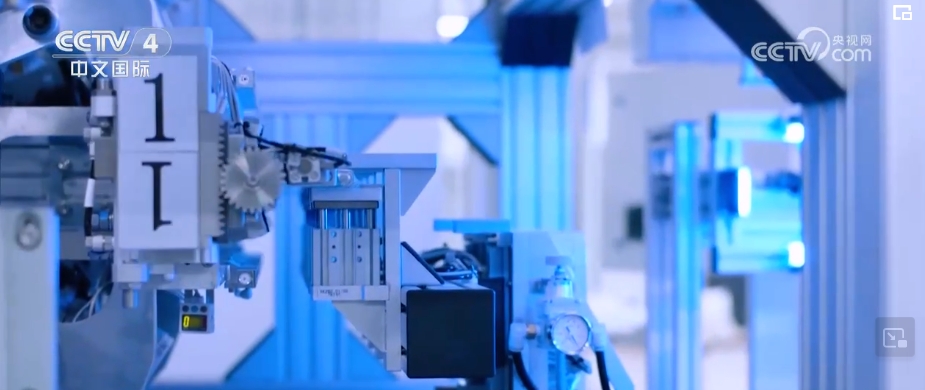
From the sub-index, the production of manufacturing enterprises continued to expand, and the new kinetic energy continued to maintain the growth momentum.
High-tech manufacturing industry has been in the expansion zone for seven consecutive months.

In May, the purchasing managers’ index of high-tech manufacturing industry was 50.7%, which remained in the expansion range for seven consecutive months. The production index and new order index remained above 52% and 51% respectively.
Policy "combination boxing" drives enterprises to increase their willingness to produce.
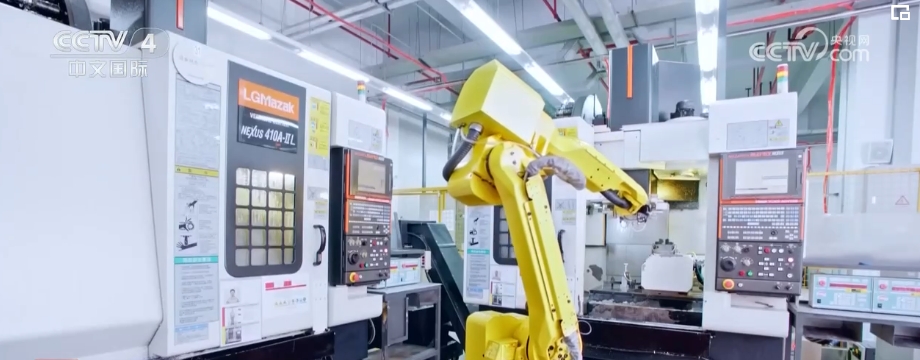
Driven by the policy of "combination boxing" such as large-scale equipment renewal and trade-in of consumer goods, the production willingness of enterprises continues to increase. In May, the production index was 50.8%, which remained above the critical point.
Multi-industry "storage and empowerment" for China’s economic recovery.

In May, the purchasing managers’ index of large enterprises was 50.7%, up 0.4 percentage points from the previous month, and it has been operating in the expansion range for 13 consecutive months. And in May, the production index was close to 53%, and the new order index was close to 52%, indicating that the supply and demand sides of large enterprises are growing well, which has a good supporting role in stabilizing the macroeconomic fundamentals.
The momentum of China’s economic recovery continues to increase.

The analysis pointed out that in May, the manufacturing operation fluctuated. Among them, there are holiday factors and the influence of the external environment, and to some extent, there is a continuation of the previous economic recovery, but the macroeconomic operation foundation is still stable. With the vigorous promotion of macro-combination policies such as large-scale equipment renewal, trade-in of consumer goods and ultra-long-term special national debt, China’s economic recovery momentum will continue to increase.
2023— Water regulation reached a new high in 2024.
It is understood that as of 12 noon on May 31, the first phase of the East Route of the South-to-North Water Diversion Project 2023— In 2024, the inter-provincial water transfer and the north extension emergency water supply project ended one after another. A total of 1.416 billion cubic meters of Yangtze River water has been transferred to Shandong, Hebei, Tianjin and other places, and the amount of water transferred has reached a record high.

The cumulative power generation of the world’s largest clean energy corridor in the first quarter of 2024 exceeded 52 billion kWh.
In the first quarter of 2024, Wudongde, Baihetan, Xiluodu, Xiangjiaba, Three Gorges and Gezhouba constitute the world’s largest clean energy corridor, with a cumulative power generation of over 52 billion kWh. It is equivalent to saving more than 15 million tons of standard coal, which can meet the domestic electricity demand of 54 million people for one year.

The entire Sichuan section of Kailiang Expressway was opened to traffic.
The Sichuan section of Kaijiang-Liangping Expressway in Sichuan was completed and opened to traffic on May 31. The Sichuan section of the expressway is about 30 kilometers long, with four lanes in both directions and a design speed of 100 kilometers per hour. It is connected with the Chongqing section of Kailiang Expressway, which was opened to traffic at the end of April 2024. The whole line is about 75 kilometers long. After opening to traffic, the journey from Kaijiang to Liangping will be shortened from 2 hours to 40 minutes.

For the first time, Taiyuan-Moscow opened a China-Europe train for commercial vehicles.
On May 31st, the first commercial train in Shanxi Province, China Europe Train, left Taiyuan for Moscow, the Russian capital. This special train is fully loaded with 290 domestic commercial vehicles and consists of 29 special carriages for railway transportation of commercial vehicles. It runs for about 8,700 kilometers and arrives at its destination in about 15 days.

In the first four months, 1,917.8 billion yuan of local government bonds were issued nationwide.
On May 31st, the Ministry of Finance announced 1-mdash; Issuance of local government bonds in April.

Data show that in April, 2024, 343.9 billion yuan of local government bonds were issued nationwide. Among them, general bonds were 133.5 billion yuan and special bonds were 210.4 billion yuan, with an average issuance period of 11.6 years and an average issuance rate of 2.41%.

1-mdash in 2024; In April, 1,917.8 billion yuan of local government bonds were issued nationwide. Among them, general bonds were 637.5 billion yuan and special bonds were 1,280.3 billion yuan, with an average issuance period of 12.5 years and an average issuance rate of 2.51%.
In the first quarter, the asset quality of banking and insurance industry was basically stable.
The main regulatory data released by the General Administration of Financial Supervision on May 31 showed that in the first quarter, the total assets of China’s banking and insurance industries grew steadily, and the asset quality was basically stable.

The data shows that at the end of the first quarter, the total domestic and foreign currency assets of China’s banking financial institutions were 429.6 trillion yuan, up 8.1% year-on-year; The total assets of insurance companies were 32.9 trillion yuan, up 4.4% from the beginning of the year.

In terms of asset quality, at the end of the first quarter, the non-performing loan ratio of commercial banks was 1.59%, which was basically the same as that of the previous quarter; In the first quarter, commercial banks realized a cumulative net profit of 672.3 billion yuan, a year-on-year increase of 0.7%. The insurance industry’s comprehensive solvency adequacy ratio is 195.6%, and its solvency is sufficient and stable.
In 2023, various businesses of China Housing Provident Fund operated smoothly.
Recently, the 2023 Annual Report of the National Housing Provident Fund jointly issued by the Ministry of Housing and Urban-Rural Development, the Ministry of Finance and the People’s Bank of China shows that in 2023, all the businesses of the National Housing Provident Fund operated smoothly.
In 2023, 1.47 trillion yuan of housing provident fund loans were issued.

According to the report, the amount of housing accumulation fund paid was 3,469.769 billion yuan, 76.201 million people withdrew 2,656.271 billion yuan from housing accumulation fund and issued 1,471.306 billion yuan of personal housing loans. The scope of flexible employees participating in the pilot housing provident fund system is also expanding. In 2023, on the basis of the first six pilot cities such as Chongqing and Chengdu, seven new pilot cities including Jinan, Wuhan, Qingdao and Kunming were added to help flexible employees such as express delivery brothers and online car drivers settle down.
Increase support for housing provident fund rental in many places.

Many cities across the country have also increased their support for renting houses, encouraging big cities to support new citizens and young people to fully withdraw the monthly housing provident fund to pay rent. In 2023, a total of 76.201 million people were supported to withdraw housing provident fund.
Beijing: Houseless families can withdraw provident fund on a monthly basis when renting a house.

At present, all localities have issued relevant rules on how to withdraw housing provident fund from renting houses. In Beijing, if you want to rent a house to withdraw the housing provident fund, the conditions that must be met are that the applicant and spouse must rent a house without housing in the local area and pay the housing provident fund in full for more than 3 months. According to the policy, starting from 2023, all newly applied rental housing in Beijing will be withdrawn from the provident fund on a monthly basis and cannot be withdrawn at one time. If you rent a house without an invoice, you can also withdraw the provident fund. The amount is 2,000 yuan per person per month. If both husband and wife pay the provident fund, the family can withdraw 4,000 yuan per month. Families with many children can withdraw according to the actual monthly rent, which is not limited by the monthly deposit.
Shanghai: the provident fund can repay the loans from different places in the Yangtze River Delta.
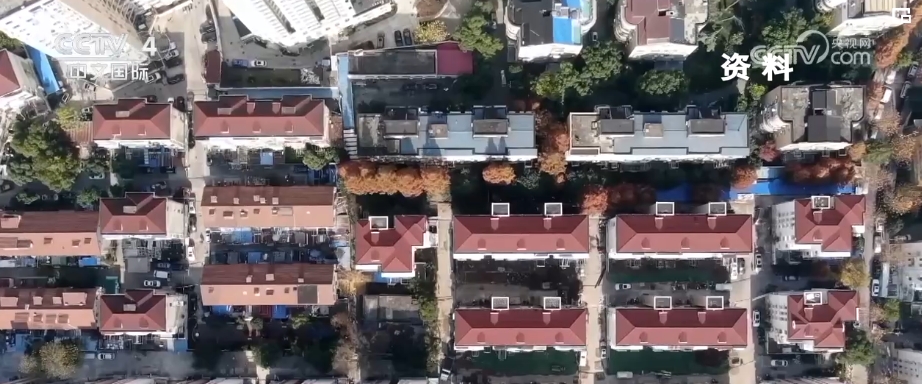
In order to promote the integration of housing provident fund in the Yangtze River Delta, on May 31, Shanghai issued a notice to support the Shanghai housing provident fund to withdraw and repay the housing provident fund loans in different places in the Yangtze River Delta. Since June 1, 2024, employees have used housing provident fund loans to purchase houses in Jiangsu, Zhejiang or Anhui, and the houses they have purchased are located in the domicile of themselves, their spouses, parents and children, or in the place where they have paid their housing provident fund, or if they and their spouses do not own their own houses in Shanghai, and there is no housing provident fund loan in Shanghai and they are not entrusted to withdraw housing provident fund to repay the housing loans, the main lender and their spouses can withdraw the balance of the housing provident fund account in Shanghai to repay the housing provident fund loans.