What has the coastline brought us?
Visualized planet, visualized planet.

"Wan Li Coast, Treasure of Wan Li"
China is a country with both land and sea. The mainland coastline is long and winding, starting from the mouth of Yalu River in Liaoning in the north and ending at the mouth of Beilun River in Guangxi in the south, with a total length of about 18000km, ranking fifth in the world.
▽ China Land Boundary and Coastline | Mapping @Lepersil/ Visualized Planet
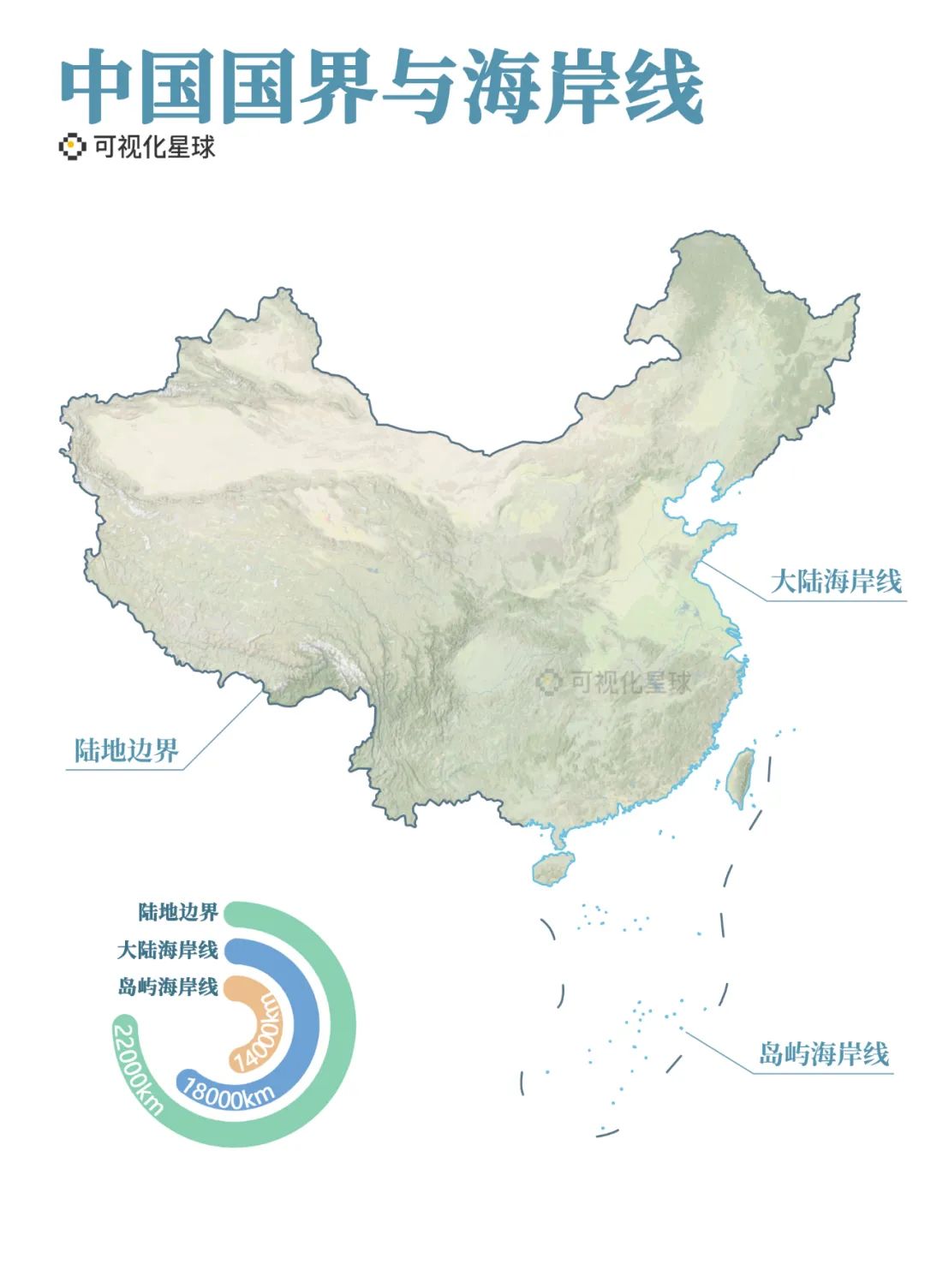
China’s coastline includes mainland coastline and island coastline, with a zigzag shape, and the total length is about 1.5 times that of the land boundary.
Continental coastline, as its name implies, is the dividing line between land and sea. Terrestrial ecosystem and marine ecosystem constantly collide here, creating rich resources.
01 diverse resources
The interaction between land and sea forms a variety of coastal landforms, which are mainly divided into two categories: plain coast and hilly coast. In the tropic of cancer and south, driven by the subtropical and tropical monsoon rain forest climate, mangrove coast and coral reef coast are formed here.
Main coastal landform types | Mapping @Lepersil/ Visualized Planet
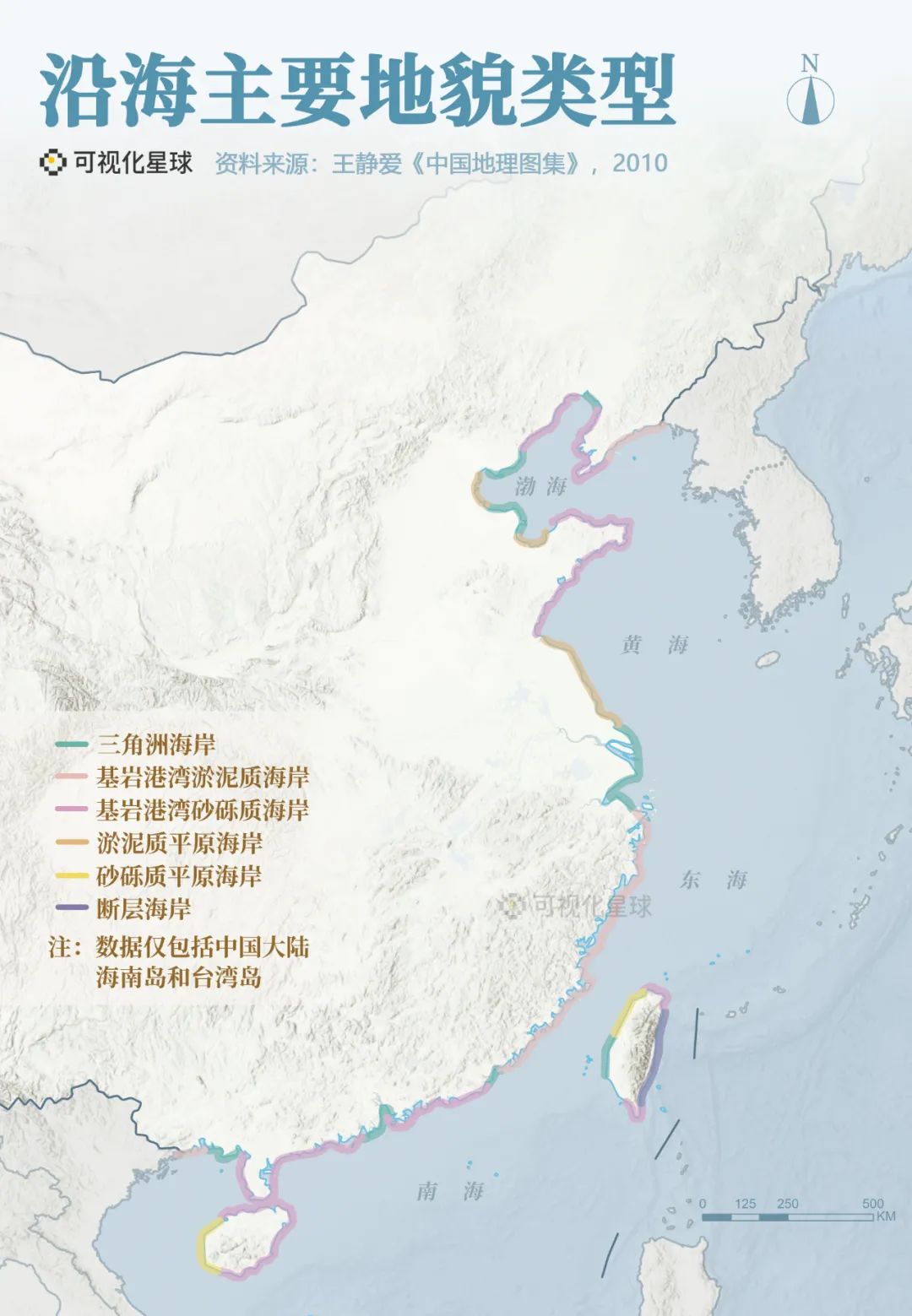
The sediment carried by the river is deposited in the estuary and the coastal zone on both sides, and the complex and changeable coastal geological structure forms a long and diverse coastal wetland here. Such as coastal marshes, estuary deltas, tidal flats, mangroves, etc.
▽ Distribution of Main Coastal Wetlands | Mapping @Lepersil/ Visualized Planet
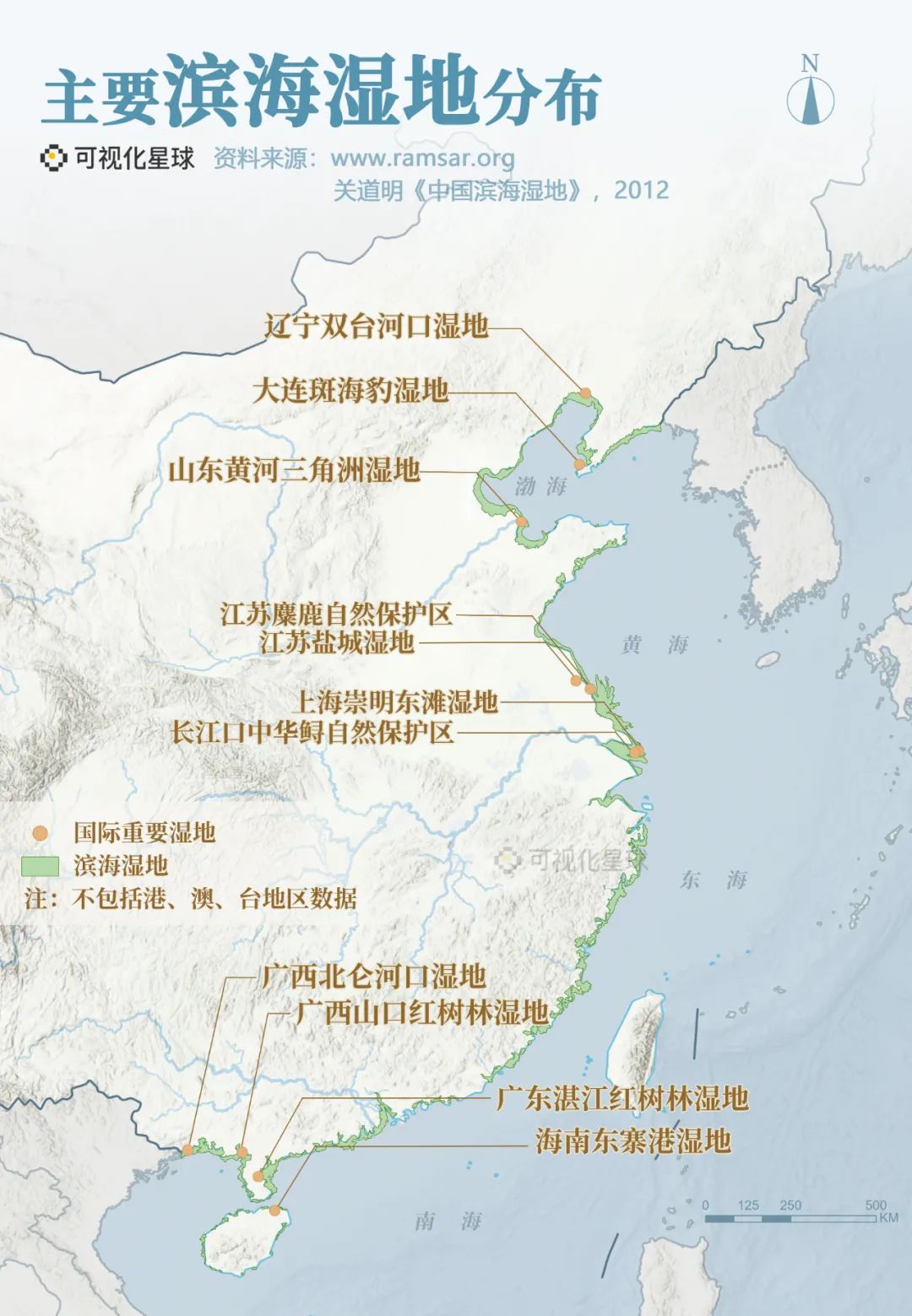
Coastal wetlands are rich in resources. Regular tides bring small fish and invertebrates in the ocean to the shallows. These small creatures are a feast in the eyes of shorebirds. Therefore, the mudflat wetland attracts a large number of waterbirds to come here for food and shelter during migration.
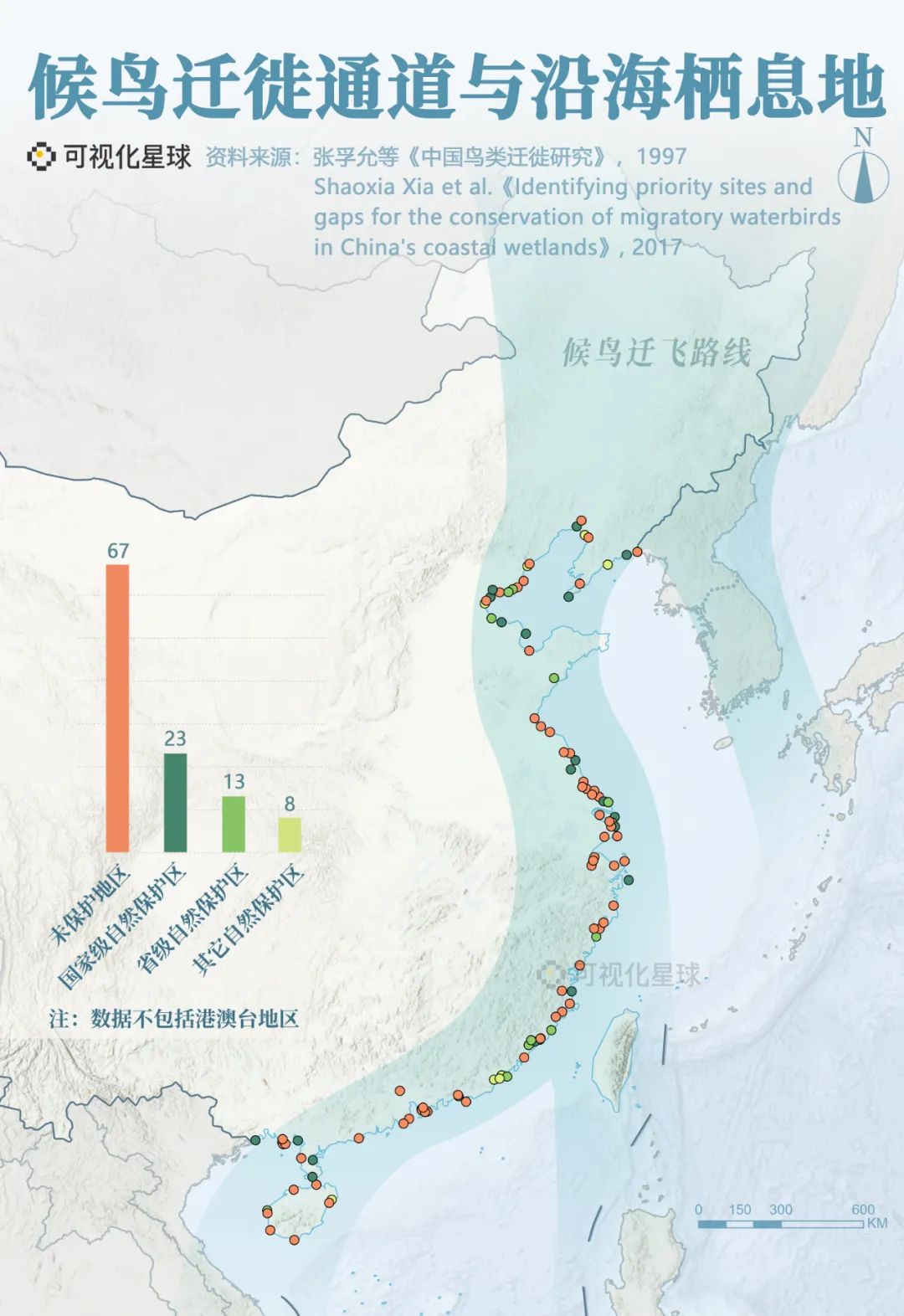
China’s coastal areas are located in the center of the migration route from East Asia to Australasia, and are the throat arteries for migratory birds to and from breeding grounds and wintering areas. Migratory birds’ habitats are all over the southeast coast of China, and less than half of them are protected at present. Migratory birds must find a suitable habitat to rest and replenish energy when they travel back and forth between the breeding ground in Russia and the wintering ground in Australia. The number of coastal habitats is very important for the survival of migratory birds.
▽ Migratory Passage of Migratory Birds and Coastal Habitat | Mapping @Lepersil/ Visualized Planet
The rich resources around the coastline also attract people to settle, develop and make a living here.
Ten coastal provinces account for 15% of the country’s land area, but they carry more than 40% of China’s population and contribute 60% of the national GDP. Among the top ten provinces in GDP, coastal provinces occupy six seats.
Since ancient times, the ocean has been a channel for China to conduct trade and cultural exchanges with foreign countries. Ocean trade was initiated in the Spring and Autumn Period. Sailors set out from Liaodong Peninsula, passed through the Korean Peninsula and sailed to Japan, opening the first overseas route.
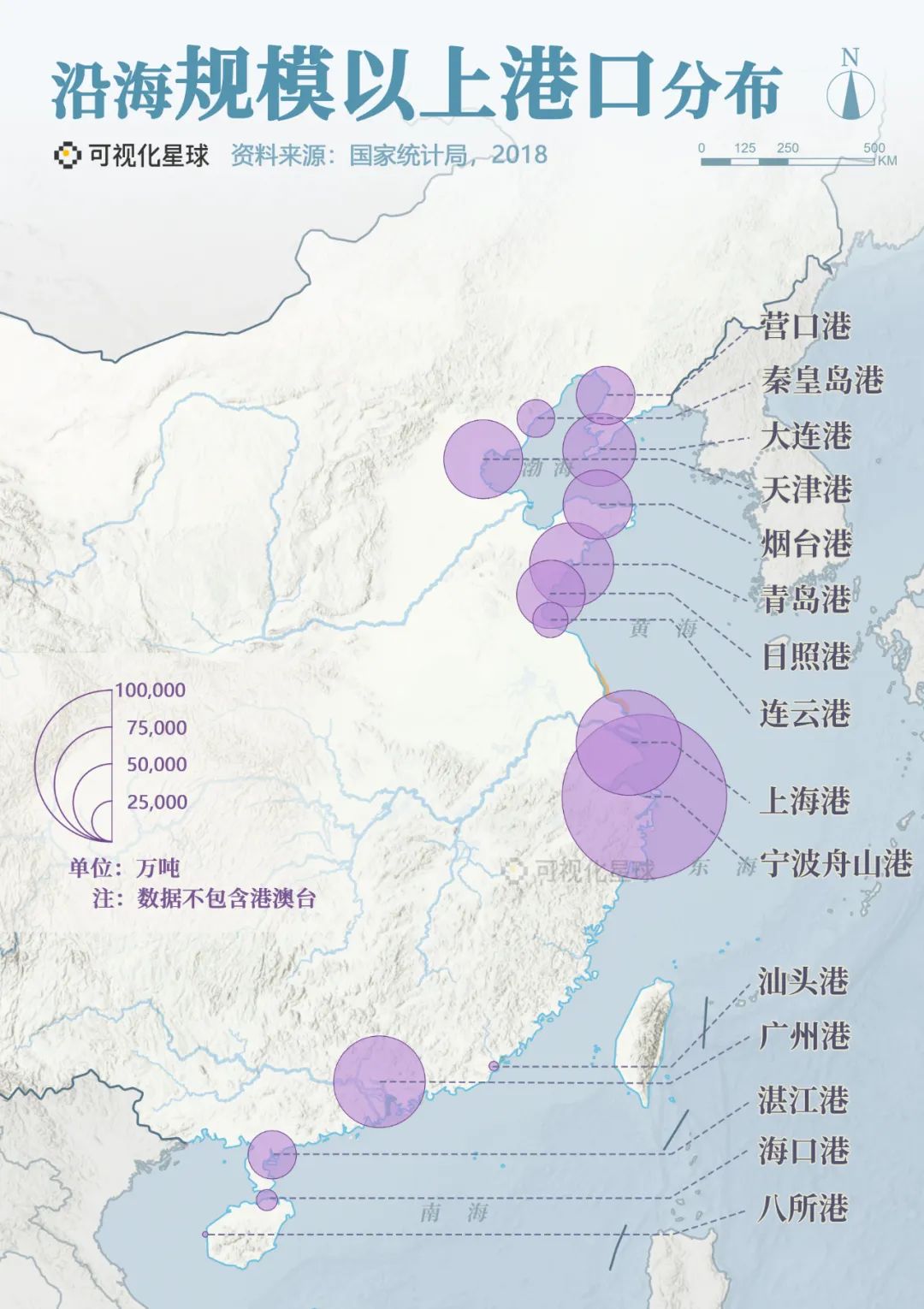
Today, China has 2007 coastal ports, and the cargo throughput of ports above designated size reaches 9,212.94 million tons, ranking among the top in the world.
▽ Distribution of ports above coastal scale | Mapping @Lepersil/ Visualized Planet
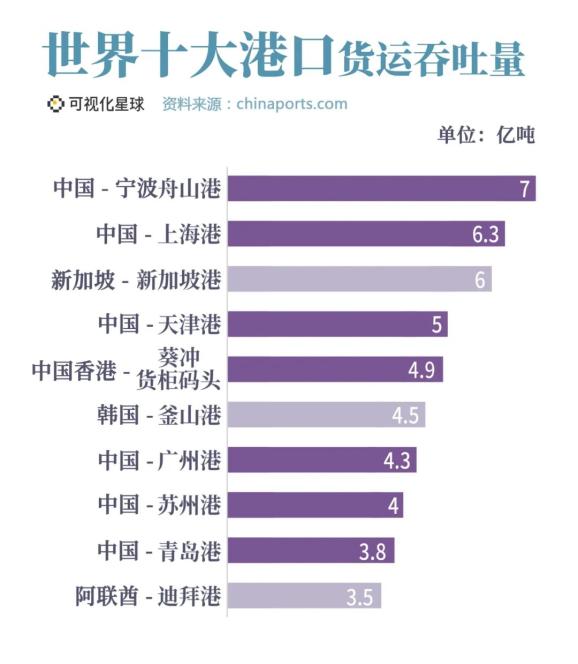
Among the top ten cargo ports in the world, China occupies seven seats, which can be described as a veritable trading power.
▽ The ranking of freight throughput of the top ten ports in the world in 2018 | Cartography @Lepersil/ Visualized Planet
02 continuous development
Sustained economic development and resource development are also constantly transforming the coastal zone.
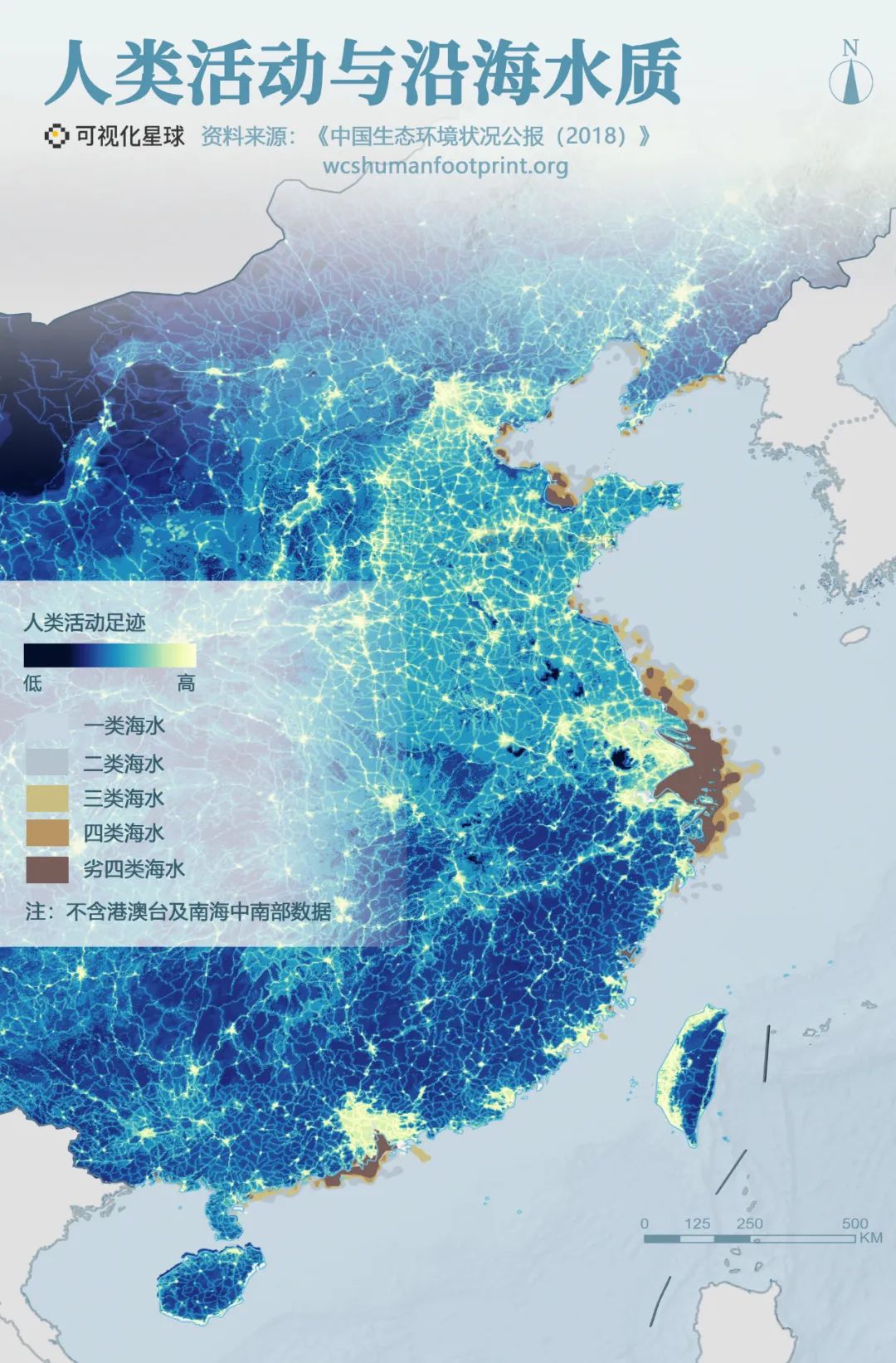
While human beings transform the environment to be more suitable for their own survival, they are also constantly releasing pressure to the ocean, and the most direct impact is seawater pollution.
Production and domestic sewage is continuously discharged into the ocean. The denser the human activities, the more serious the seawater pollution. The areas with serious seawater pollution are concentrated in Bohai Rim, Yangtze River Delta and Pearl River Delta.
▽ Human Footprint and Coastal Water Quality | Cartography @Lepersil/ Visualized Planet
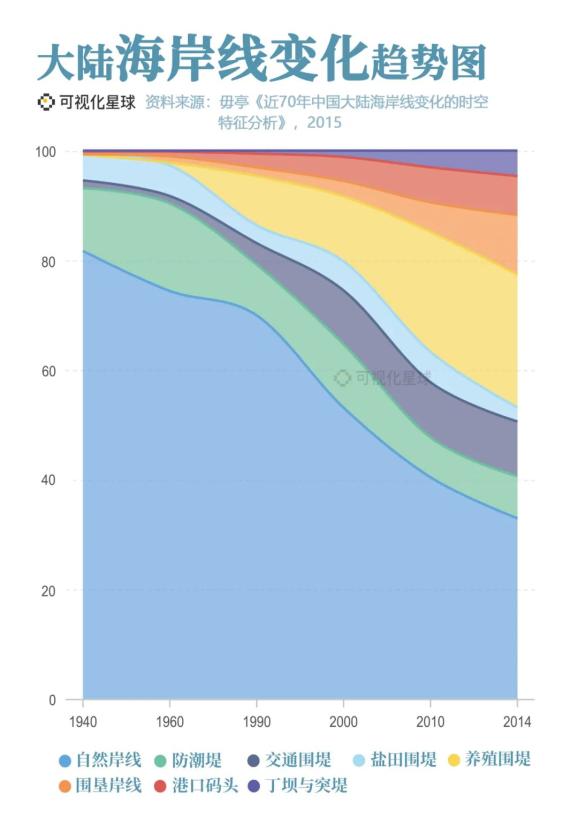
At the same time, maritime transportation, fishery breeding, Yantian and urbanization expansion have also transformed the coastline.
In the past 70 years, great changes have taken place in the coastline of mainland China, and more and more natural coastlines have been replaced by artificial coastlines such as reclamation and docks.
Change trend of continental coastline | Mapping @Lepersil/ Visualized Planet
At the same time of rapid development, excessive reclamation, intensive port and dock construction, land reclamation and other human activities have brought a series of ecological and environmental problems to the coastline and affected the balance of the ecosystem.
How to protect resources and the environment while enjoying resources is an eternal topic with development.
-End-
Written by | Lepersil
Cartography | Lepersil
Audit | Wang Chaoyang
References:
1. Guan Daoming. China Coastal Wetland [M]. Ocean Press: Beijing, 2012.
2. Wuting. Analysis of temporal and spatial characteristics of Chinese mainland coastline changes in recent 70 years [D]. 2016.
3. Xia, Shaoxia, Yu, Xiubo, Millington, Spike, et al. Identifying priority sites and gaps for the conservation of migratory water birds in China’s coastal wetlands [J] .2017.
4. Zhang Fuyun, Yang Ruoli. Research on China and bird migration [M]. China Forestry Press: 1997.
5. National Bureau of Statistics. Annual data [OL]. http://data.stats.gov.cn/easyquery.htm? cn=C01
Original title: "What does the coastline bring us? 》
Read the original text